Choosing the Right Gutters & Snow Stops on a Metal Roof
Metal roof with no gutters and a box of snow stops? Learn how to choose the right gutter size, manage water flow, and install snow guards so your system actually works.
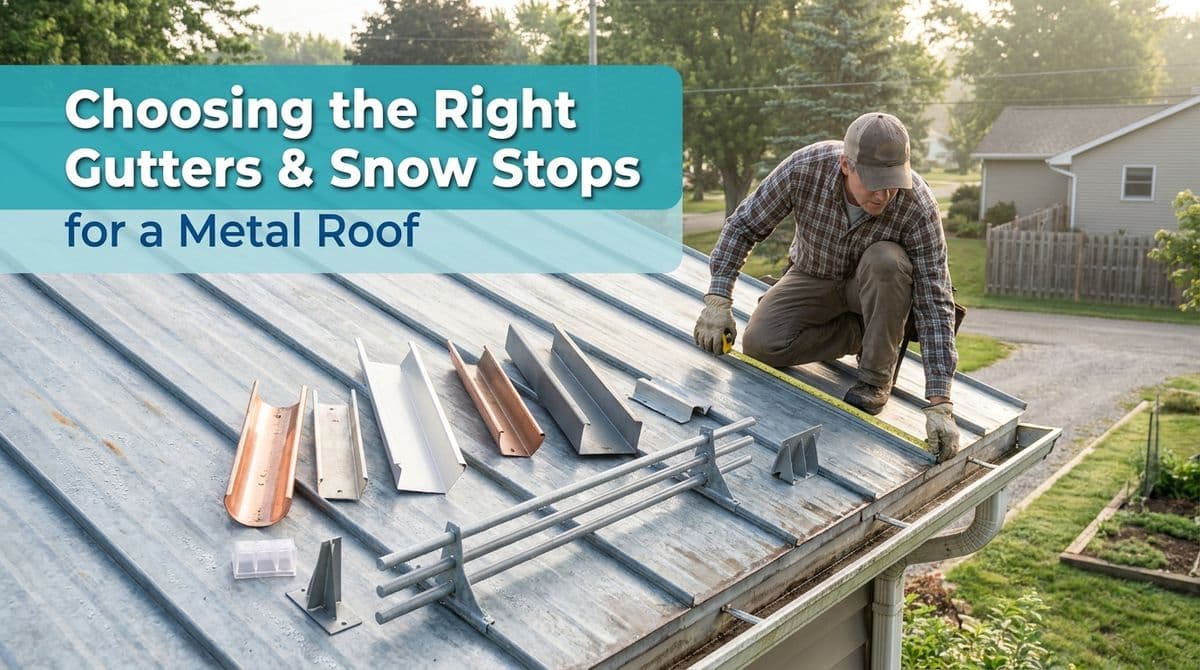
Helping a Metal Roof Homeowner Pick Gutters and Snow Stops
We recently got a call from a homeowner — let’s call her Emily — who had a metal roof, no gutters, and a box of unused snow stops sitting in her garage.
Emily’s questions were ones we hear a lot:
- “Do I really need bigger gutters for a metal roof?”
- “What size gutter should I choose — 5-inch or 6-inch?”
- “Can you install the clear plastic snow guards I already bought?”
- “How does that little lip on my metal roof affect the gutters?”
We walked her through all of it on the phone and scheduled a visit, and we thought it’d be helpful to share the same guidance here for anyone else trying to figure out gutters and snow stops on a metal roof.
Why Metal Roofs Need the Right Gutter Size
When Emily mentioned she had a metal roof with a small lip that hangs past the fascia, that immediately told us two things:
- Water is going to shed fast off that roof.
- We’d likely be recommending a 6-inch gutter.
Metal roofs are smooth and slick. Instead of rain soaking into shingles and slowing down, it runs off like water on glass. That means more water volume hitting your gutters, more quickly, especially during heavy storms or fast snow melt.
On top of that, many metal roofs (like Emily’s) have panels or a drip edge that extend out past the fascia. If the gutter is too small or set too far back, water can shoot right over the front edge instead of landing in the trough.
5-Inch vs. 6-Inch Gutters on a Metal Roof
We usually carry and install two main sizes: 5-inch and 6-inch K-style gutters. Here’s how we helped Emily think it through.
When 5-Inch Gutters Can Work
We sometimes recommend 5-inch gutters when:
- The roof is smaller or has short eave runs.
- The roof pitch is gentler (water doesn’t rush off as fast).
- There’s no big overhang or lip past the fascia.
- The area doesn’t see extreme rainfall.
On a typical asphalt shingle roof with standard overhangs, 5-inch gutters often do a fine job. But on metal, we’re more cautious.
Why We Usually Recommend 6-Inch on Metal
Like we told Emily on the phone, 6-inch gutters are typically what we recommend for most metal roofs because they:
- Handle higher water volume during downpours and fast snow melt.
- Sit slightly farther out, helping catch water that runs off a roof lip.
- Allow for larger downspouts, which move water away from the house more quickly.
Even though 6-inch gutters look a bit larger, once they’re up, most homeowners tell us they like the way they “frame” the roof line, especially on homes with metal roofs and bolder trim.
Dealing with Roof Lips, Overhangs, and Water Flow
One of Emily’s big worries was that lip on the edge of her metal roof. She didn’t want to invest in gutters just to watch rainwater shoot right past them in a heavy storm.
When we come out to a home like hers, we look closely at:
- How far the metal extends past the fascia.
- Roof pitch (how steep it is).
- Valleys and places where multiple roof sections dump water into one area.
- Existing ground drainage and problem spots (like washed-out landscaping or wet basements).
From there, we can decide on:
- 5-inch vs. 6-inch gutters (on metal, we’re usually leaning 6-inch).
- Gutter placement to sit under the water path, even with a lip.
- Downspout locations and sizes so water has somewhere to go.
We also carry samples, so like with Emily, we can physically show you how the gutter will line up with your roof edge before anything is installed.
Using Clear Plastic Snow Stops on a Metal Roof
Emily had another great question: she already owned a box of clear plastic snow stops with rubber gaskets and wanted to know if we could install them instead of ordering something new.
We see this type of snow guard a lot, and we had just installed a similar style on another metal roof a month earlier. They can work very well when installed correctly and used in the right layout pattern.
What Snow Stops Actually Do
On a metal roof, snow tends to slide off in big sheets. Snow stops (or snow guards):
- Break up those sheets so snow comes down gradually.
- Protect gutters from being ripped off by heavy sliding snow.
- Help prevent dangerous roof avalanches over entryways and walkways.
With Emily’s clear guards, each one had a rubber gasket instead of relying solely on caulk. That’s a plus — it helps create a seal between the snow stop and the metal panel and reduces the long-term dependence on sealant alone.
Key Considerations When Installing Snow Stops
When we install homeowner-supplied snow stops like Emily’s, we pay close attention to:
- Roof type: Not all guards work on every metal profile.
- Layout pattern: They need to be spaced and staggered correctly to spread the snow load.
- Fasteners and gaskets: Using the right screws and tightening them properly so the gasket seals.
- Placement above gutters: So snow isn’t allowed to slam directly into your new gutters.
We always recommend tying snow stop placement into the overall drainage plan — gutters, downspouts, and where the water and melt will ultimately go.
Installation Options and What to Expect
Emily also wondered if someone would meet her on-site to look everything over and talk through options. The answer is yes — that’s a key part of doing this right.
On a typical visit, we will:
- Walk the exterior and look at roof lines, overhangs, and trouble spots.
- Discuss 5-inch vs. 6-inch gutters for each side of the home.
- Plan downspout locations that work with your landscaping and hardscapes.
- Review your existing or planned snow stops and how they’ll interact with the gutters.
- Show you samples so you can see the size and color in person.
From there, we put together a clear quote and timeline, and once approved, schedule the installation for a day with decent weather.
Need Help Choosing Gutters and Snow Stops for Your Metal Roof?
If you’re like Emily — metal roof, no gutters yet, and questions about snow stops — you’re not alone. The right combination of gutter size, placement, and snow control can make a huge difference in how your home handles rain and winter weather.
We’re always happy to come out, look at your specific roof, and talk through what will work best. Whether you need new gutters, help installing homeowner-supplied snow stops, or both, we can help you put together a system that actually works in real-world storms and snow.