Siding Damage 101: Repair, Replace & Itemized Quotes
Learn how to tell if your siding needs repair or replacement, and how to get a clear, itemized quote that works with or without insurance.
When a “Simple Quote” Turns Into Bigger Questions
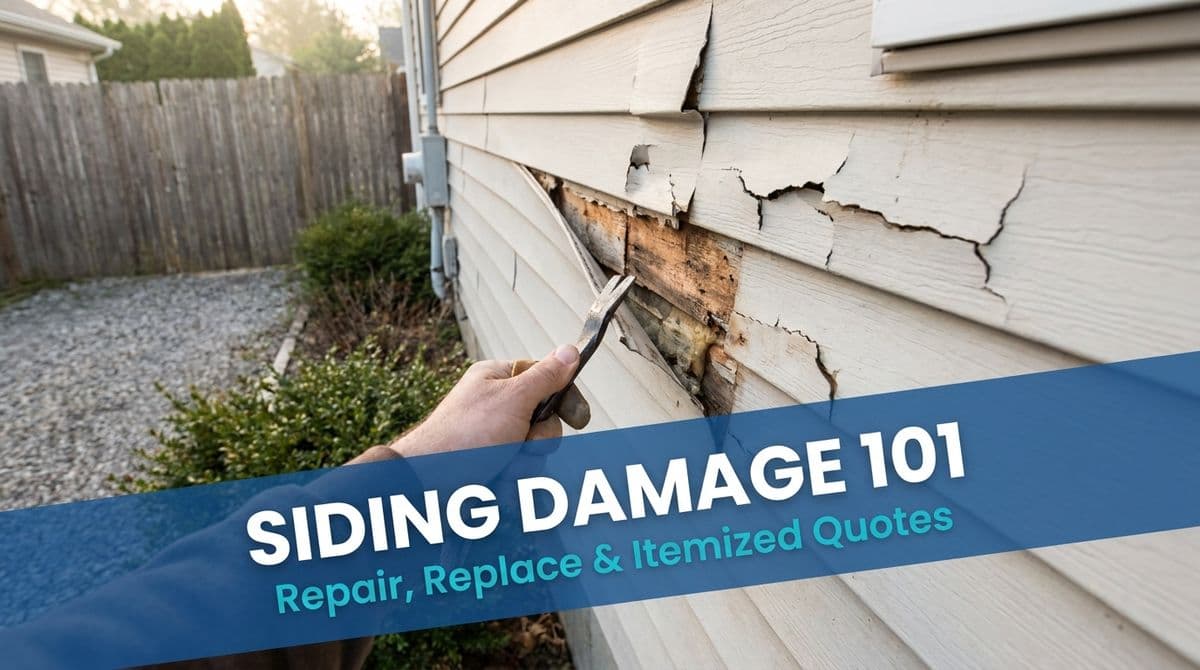
We recently got a call from a homeowner — let’s call him Mike — who had just discovered damage to the siding on a house he owned. Mike said almost the same thing a few times, because he was clearly stressed: he needed “a quote on repairing or potentially replacing some siding” and he really wanted it itemized. On top of that, he told us, “We might do an insurance claim on it, but I’m not insured quite yet.”
We hear versions of Mike’s situation all the time. The siding is damaged, you’re not sure how bad it is, you’re not sure if it’s a repair or full replacement, and you’re trying to figure out how an insurance claim might fit in — or what to do if you’re paying out of pocket.
So in this post, we want to walk you through exactly how we helped Mike, and what you should know about siding damage, repair vs. replacement, and getting a clear, itemized quote with or without insurance.
Siding Damage 101: Is It a Repair or a Replacement?
When Mike first called, his biggest question was, “Do I have to replace all of it, or can we just repair the damaged parts?” That’s always the starting point. During our inspection, we look at three main things:
- Location and size of the damage – Is it a few cracked or missing panels, or is damage spread across multiple walls?
- Underlying issues – Is there moisture, rot, or insect damage behind the siding?
- Age and availability of materials – Can we match your current siding in color, style, and profile?
We explained to Mike that if the damage is confined to a small area, the rest of the siding is in good shape, and matching material is still available, a targeted repair can be a smart, cost-effective choice.
When We Recommend Repair
In general, we lean toward repair when:
- The damage is limited to one section or one elevation.
- There are no signs of water intrusion or rot behind the siding.
- The existing siding is relatively new and still manufactured.
- You’re looking for the most budget-friendly, short- to medium-term solution.
When We Recommend Full Replacement
On the other hand, we talk seriously about replacement when:
- Damage is scattered all around the home (often from hail or wind).
- We find soft spots, mold, or rot when we probe behind the boards.
- Your siding is near the end of its lifespan or no longer made.
- Color matching would leave your home looking patchy and uneven.
We told Mike the same thing we tell anyone: a full replacement is a bigger investment up front, but if the siding is failing in multiple areas, it usually saves money and headaches over the next 10–20 years.
How an Itemized Siding Quote Should Look
Mike was very clear: he needed an itemized quote he could use whether he went through insurance or paid cash. That’s where our process — and our insurance coordination team — really comes in.
For every siding project, we break the quote down line by line. A thorough, itemized estimate typically includes:
- Materials – Type of siding (vinyl, fiber cement, wood, etc.), trim, house wrap, flashing, caulking, and fasteners.
- Labor – Removal of old siding, surface prep, installation, and cleanup.
- Disposal – Dump fees and hauling away debris.
- Repairs to sheathing or framing – If rot or water damage is found once siding is removed.
- Optional upgrades – Insulated siding, higher-end profiles, or accent areas.
We walked Mike through each line so he could see exactly what was driving the cost. That transparency helps whether you’re talking to your insurance adjuster or just comparing contractors.
With Insurance, Without Insurance: Your Options
Mike’s other concern was, “We might do an insurance claim on it, but I’m not insured quite yet.” That’s complicated, but not unusual. Here’s how we generally guide homeowners in his situation.
If You Do Have Insurance Coverage
When damage is sudden and accidental — from hail, wind, or a fallen tree — your homeowner’s policy may help. In those cases, we usually:
- Document the damage with photos and notes.
- Provide a detailed, itemized estimate to submit with your claim.
- Meet with the adjuster on-site, if requested, to explain the scope.
- Clarify what’s covered (and what isn’t), and any code upgrades required.
Our insurance team doesn’t work for your insurance company — we work for you, making sure the scope of work matches what’s actually needed to put your home back together correctly.
If You’re Paying Out of Pocket
In Mike’s case, he wasn’t insured for this damage yet, so we talked through non-insurance options. When you’re paying cash, the priorities shift slightly:
- We may phase the work — tackling the worst elevations first.
- We look for durable but budget-friendly material choices.
- We simplify the scope where possible without cutting corners that affect performance.
An itemized quote is even more important here, because it lets you see which parts of the project are must-haves and which are upgrade options you can defer.
Quick Maintenance Tips After Your Siding Is Fixed
Once the repair or replacement is done, a little basic care goes a long way toward protecting your investment:
- Wash annually – Gently rinse siding with a garden hose and mild soap to remove dirt and mildew.
- Keep vegetation trimmed – Maintain a gap between bushes/trees and your siding to prevent scratching and moisture buildup.
- Check caulking and paint – Every couple of years, inspect for cracked caulk or peeling paint, especially around windows and doors.
- Walk around after big storms – Look for new cracks, chips, or loose panels so small issues don’t turn into big ones.
A Simple Checklist Before You Call a Siding Contractor
Before you pick up the phone, it helps to have a few details ready. Here’s what we asked Mike, and what we suggest you jot down:
- Type of siding you have now (vinyl, wood, fiber cement, not sure is okay too).
- Where the damage is located (front, back, one side, multiple sides).
- How and when the damage happened (storm, impact, slow deterioration).
- Whether you’ve filed or plan to file an insurance claim.
- Any photos you can text or email before our inspection.
With that information, we can give you a much clearer picture of repair vs. replacement, rough cost ranges, and next steps before we even come out.
Need Help Sorting Through Your Own Siding Situation?
If you’re in a similar spot to Mike — staring at damaged siding and trying to decide what to do next — we’re here to help. We’ll inspect the damage, explain whether repair or replacement makes the most sense, and provide a clear, itemized quote you can use with or without insurance.
You don’t have to guess your way through it. Let our exterior and insurance experts walk you through the options so you can make a decision that’s right for your home and your budget.